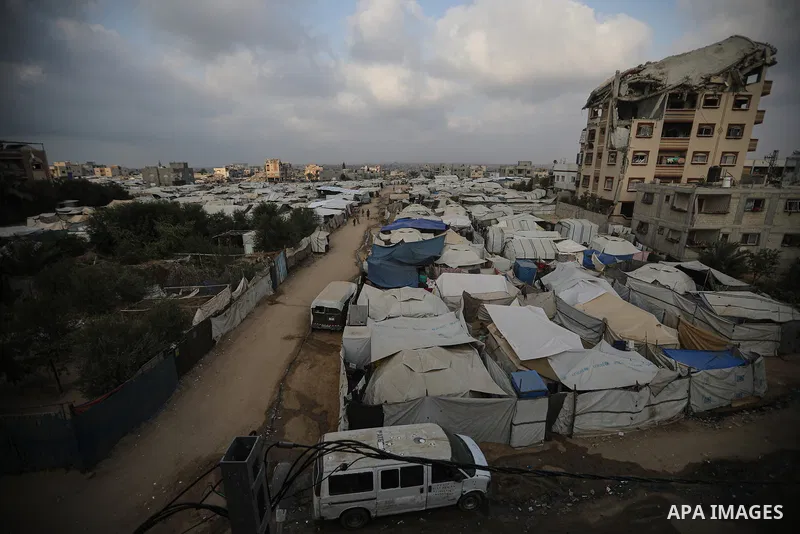
Displaced Palestinians go about their daily lives amid difficult living conditions in Gaza City, with continued shortages of shelter and basic services following widespread destruction caused by the war. Thousands of displaced people prepare to face the winter in tents and temporary shelters lacking protection from rain and cold, amid worsening humanitarian conditions in the Gaza Strip.
An Israeli strike targeting a group of people in the al-Rimal neighborhood of western Gaza City on November 1, 2026 killed three Palestinians, including a child, wounded others and damaged tents sheltering displaced people at the site. Paramedics carried the dead and wounded to al-Shifa Hospital, where mourners gathered around the bodies to bid farewell to their relatives.
Seven-year-old Fula Asaliya, who suffers from muscle atrophy and severe malnutrition, lives with her family in a tent at the Halawa displacement camp in the northeastern Gaza Strip, where they face shortages of food, baby formula and the medications her condition requires amid the continued Israeli blockade. According to the Palestinian Ministry of Health, approximately 158,000 children in Gaza suffer from acute malnutrition, including 28,000 whose lives are at risk.
Displaced Palestinians carry out their daily activities inside makeshift tents at the Nuseirat refugee camp in the central Gaza Strip amid a prolonged displacement crisis and deteriorating living conditions as winter approaches. Families face shortages of adequate shelter and growing risks from rain and flooding, while approximately 1.98 million people across the Gaza Strip need shelter and essential household assistance, according to UN figures.
Displaced Palestinians struggle to continue their lives in temporary tents set up near the rubble of destroyed homes in Jabalia refugee camp, northern Gaza Strip, amid growing fears over the approaching winter. Shelters of nylon and worn fabric cannot withstand rain and cold, as families face severe shortages of blankets, winter clothes, heating supplies, food and water caused by the blockade and border crossing closures.
Displaced Palestinians gather for free meals and receive WFP food parcels in the Nuseirat refugee camp in the central Gaza Strip on October 20, 2026, amid worsening food insecurity caused by the war. The World Food Programme announced cuts due to funding shortages, reducing monthly beneficiaries from 1.6 million to 1.1 million and daily hot meals from 250,000 to 150,000, while around 1.4 million people in Gaza face crisis-level or worse acute food insecurity.
Umm Maher al-Buraim waits in a shelter for displaced people in Khan Younis on October 7, 2026, for news of her son Maher, missing since 2024, after about 1,000 days of searching. Reports, including figures documented by a human rights body, estimate that more than 11,200 people are missing or forcibly disappeared in Gaza, including more than 4,700 women and children.
Kanaan Abu Jibba, the only surviving member of his family after an Israeli strike on their Shujaiya home killed his father, mother and sisters, writes in his notebook inside a tent in Gaza City on September 21, 2026. His left hand was amputated, and he now lives with his grandmother and uses a prosthetic limb as children in Gaza begin a new school year under harsh conditions.
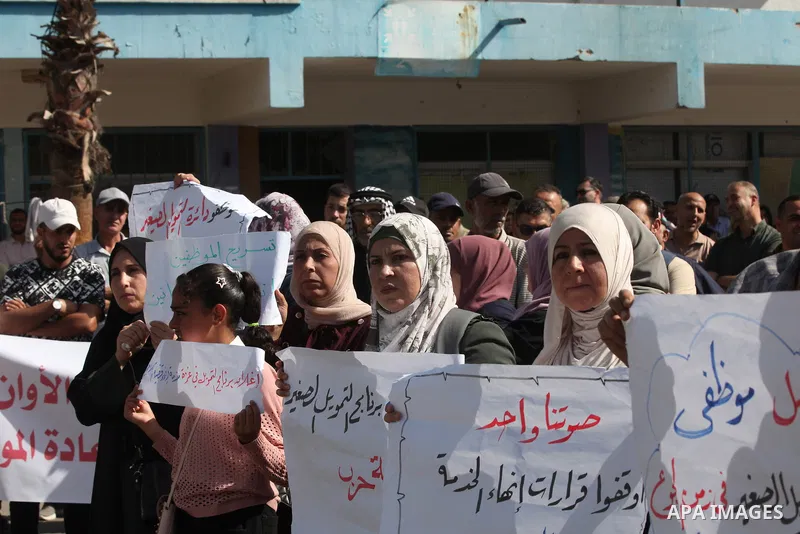
Employees and workers of the United Nations Relief and Works Agency for Palestine Refugees (UNRWA) hold placards during a protest in Khan Younis, southern Gaza Strip, on November 9, 2026, announcing the start of workplace civil disobedience measures against agency management decisions to terminate dozens of workers' contracts and what they described as violations of their employment rights. The employees warned that the measures and cuts to relief services would further worsen the humanitarian and living conditions of Palestinian refugees in the Gaza Strip.
Mourners bid farewell to the bodies of five Palestinians, including three children, during funeral ceremonies at Al-Aqsa Martyrs Hospital in Deir el-Balah, central Gaza Strip, on November 9, 2026. The five were killed when a sand dune collapsed onto tents sheltering displaced families following heavy rainfall.
Mourners attend the funeral of Palestinian Mahmoud Hammad at Nasser Medical Complex in Khan Younis, southern Gaza Strip, on November 9, 2026. Hammad was killed the previous day in an Israeli strike targeting a group of Palestinians in the coastal al-Mawasi area of Khan Younis, which shelters hundreds of thousands of displaced people.
Mourners bid farewell to the bodies of Palestinian children Habiba al-Zein and Salah Nabhan at the morgue of Nasser Medical Complex in Khan Younis, southern Gaza Strip, on November 9, 2026. The two children were killed alongside three other Palestinians when a large mass of sand and rock collapsed onto tents sheltering displaced families south of Deir el-Balah, central Gaza Strip, following heavy rainfall and flooding during a severe storm.
Displaced Palestinians try to retrieve their belongings and inspect the remains of their tents buried under mud after a rain-triggered collapse of a sandy and rocky embankment hit a temporary camp in Deir el-Balah, central Gaza Strip, on November 9, 2026. The landslide killed five Palestinians, including three children and two women, and wounded others as they slept in their tent, amid a storm system that has flooded tens of thousands of tents at the start of winter.
Displaced Palestinians go about their daily lives near their tents after they were flooded by rainwater and runoff in a camp west of Gaza City, on November 8, 2026. Families struggle to carry on amid muddy conditions inside their makeshift shelters, as camps lack even basic drainage systems and residents face a shortage of habitable alternatives with the onset of winter.
Displaced Palestinians inspect their tents flooded by rainwater in Khan Younis, southern Gaza Strip, on November 8, 2026, as the first winter storm system affects the territory. The storm comes amid reports that tens of thousands of tents sheltering displaced people were flooded, prompting calls for urgent relief intervention to provide shelter and assistance for those affected.
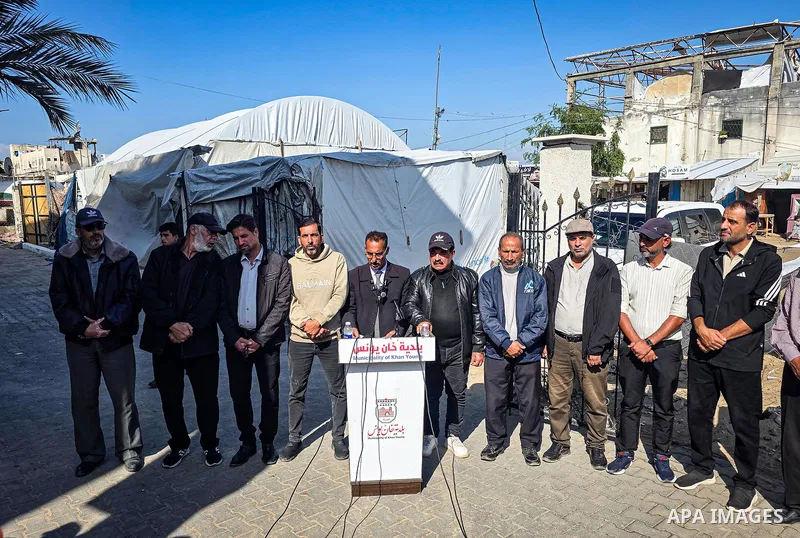
Representatives of Palestinian national and Islamic factions hold a press conference in Khan Younis, southern Gaza Strip, on November 8, 2026, calling on the international community and humanitarian relief organizations to urgently provide assistance and basic necessities to displaced Palestinians. The appeal follows damage caused by a recent storm system amid worsening humanitarian and living conditions in the Gaza Strip.
Four-year-old Palestinian girl Tala Abu Ouda, who lost one of her hands in an Israeli strike, stays at a school sheltering displaced Palestinians in western Gaza City on November 8, 2026, after being pulled from the rubble of her family's home in the northern Gaza Strip. She continues to face difficult living and humanitarian conditions amid ongoing war and displacement in the Gaza Strip.
Displaced Palestinians inspect their tents flooded by rainwater in Deir el-Balah, central Gaza Strip, on November 8, 2026, following heavy rainfall and strong winds brought by the first storm system of the season. Local authorities reported that around 70,000 tents housing displaced people were flooded and, according to Civil Defense estimates, approximately 350,000 people were affected by the storm, amid shortages of shelter and heating supplies.
Displaced Palestinians struggle to collect water amid severe shortages affecting large parts of Khan Younis in the southern Gaza Strip. A power generator operating water wells has been out of service for more than a week, forcing residents to travel long distances to meet their basic water needs.
Palestinians inspect the site of an Israeli airstrike that targeted a tent sheltering displaced people near the Municipal Park in central Gaza City. According to medical sources, the strike killed a woman and wounded several other people.
Displaced Palestinians receive meals from a charity kitchen in the Mawasi area of Khan Younis, southern Gaza Strip, on November 4, 2026. The scene comes amid deteriorating living conditions and shortages of basic necessities, with displaced families relying on meals provided by charitable initiatives and community kitchens to meet their daily food needs.
Ten-year-old Amir Jaha, who suffers from type 1 diabetes, receives his daily insulin injection with his mother's help inside their shelter in Gaza City on November 4, 2026, as his family struggles to obtain medication amid severe medical supply shortages, the blockade, border crossing closures and power outages that make refrigeration difficult. Unable to secure a regular supply, his mother has resorted to expired insulin doses, raising concerns over the impact on his health and life.
Palestinians take part in a protest march organized by the Arab Employees Union of the United Nations Relief and Works Agency (UNRWA) at the Nuseirat refugee camp in the central Gaza Strip on November 2, 2026. Protesters denounce what the union describes as violations of employees' rights and threats to refugee services, demanding protection for workers' rights and the continued provision of UNRWA services amid deteriorating humanitarian and living conditions in the Gaza Strip.
Palestinians gather outside the International Committee of the Red Cross (ICRC) office in Gaza City on November 2, 2026, to mark the anniversary of the Balfour Declaration and demand Palestinian national rights, including freedom and self-determination. Participants also highlight the plight of Palestinian prisoners held in Israeli jails and call for their release.